

Two new Lokotracks, a narrower water rule, and where August's new pits opened

This week features Jarmo Vuorenpaa of Metso, Cody Tufford of Superior Industries, and James Younger Jr. of Cranesville Block.
| Featured this week |

VP, Track Solutions · Metso
|

Product Manager · Superior Industries
|
JY
Crushing Division Manager · Cranesville Block
|
Two new Lokotracks, one for recycling and one for aggregate
Lead: A 70 tonne diesel-electric impact crusher for demolition feed, and a compact cone with screening built in.

The LT400RS, from Metso's launch announcement.
On Thursday Metso added two models to the Lokotrack range. The LT400RS is a 70 tonne diesel electric mobile impact crusher in the Lokotrack EC Range, aimed squarely at recycling and demolition, where the feed carries rebar, wood and whatever else came off the site and quality swings load to load. The LT200HPX is a mobile cone with screening built in, for aggregate production in a compact package. Jarmo Vuorenpaa, who runs track solutions at Metso, put the pitch in cost per tonne and uptime terms. If you run either family, the parts lists behind them are the part we will be watching.
Three new operations opened in August
Lead: Small independents are opening this year's new pits. The big producers are buying instead.

| Denver Rock Company, Carr CO | Sand and gravel |
| Independent Aggregates, Lueders TX | Crushed limestone |
| AuzTerra Aggregates, Hempstead TX | Sand and gravel |
August is a quiet month for openings. Pits get opened in spring, and by late summer crews are running them, not building them. The three that did open are small: a sand and gravel pit north of Fort Collins, another outside Houston, and a limestone quarry near Abilene. That fits the whole year. The big producers are growing by buying each other, as Martin Marietta did last month, while the new pits are being opened by small independents, most of them first-time operators, and a third of them in Texas.
A narrower line on which water on your site is federal
Lead: Seasonal ditches, culverts and intermittent streams would fall outside federal permitting if the proposal holds.

The kind of seasonal channel the proposal would put outside federal jurisdiction. Image from ARTBA.
On Friday the EPA and the Army Corps of Engineers proposed a supplemental rule narrowing which waters and wetlands fall under the Clean Water Act. The change is in the definitions. Relatively permanent waters would be limited to perennial ones, meaning water standing or flowing every day of the year, with limited exceptions. For anyone permitting a pit, a haul road or an expansion, that draws a clearer line around drainage channels, ditches, culverts and streams that only run part of the year, and around whether an adjacent wetland triggers a federal permit. Comments run for 30 days once it publishes.
Read what the proposal changes
Five screen wear patterns that tell you what is wrong upstream
Lead: The way a panel wears is the cheapest diagnostic on the plant, and it is usually pointing at the feed.

A screen deck from above. Image from Superior's knowledge base.
On Tuesday Superior Industries published five screen media wear patterns and what each one means. Product manager Cody Tufford's point is that most producers run media until it is done and swap it, when the pattern left behind is a record of everything happening upstream. Wear heavier on one side is a side loaded feed. Wear concentrated at the feed end means material is landing on the panel instead of in the feed box. Plugged openings point at stroke, speed and the crusher settings ahead of the deck. His practical tip: take stroke readings under load, because a side loaded condition can hide completely on an empty machine.
Two minutes with a crushing spread in greywacke
Lead: A jaw and a cone in super abrasive sandstone at Kingston, New York, and the manager who runs them on what holds up.
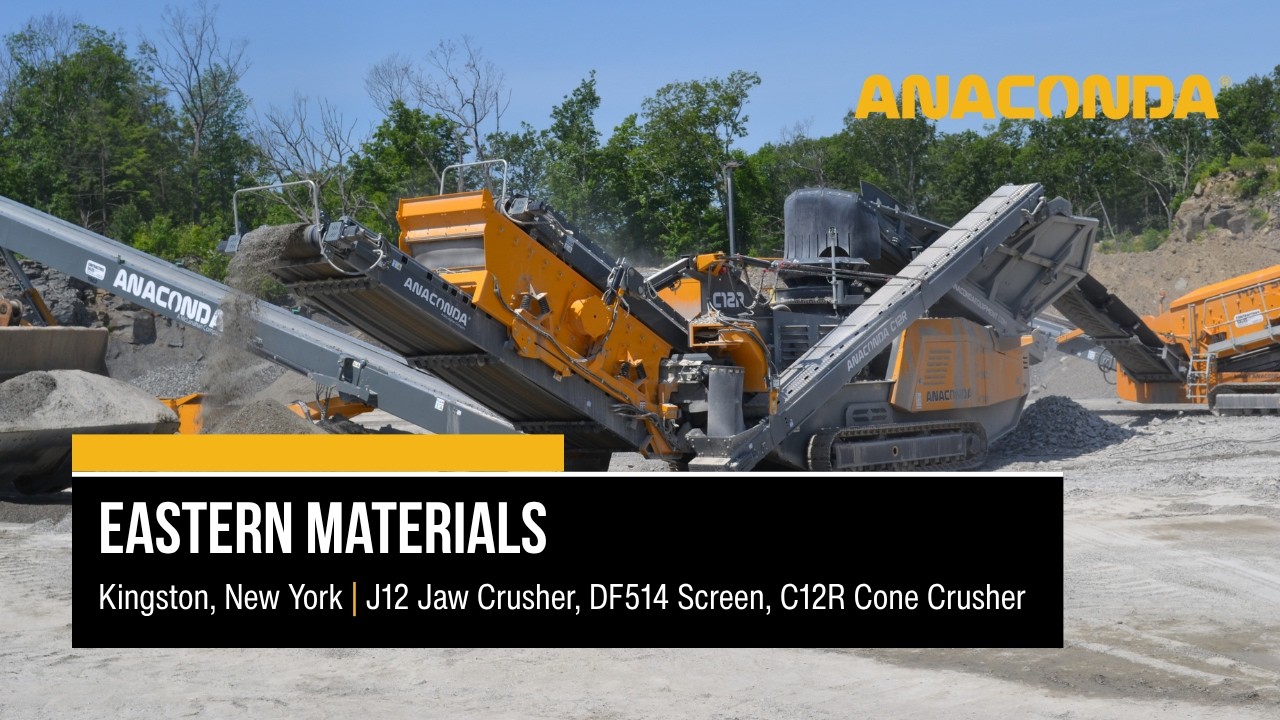
The Eastern Materials spread, from Anaconda's video.
On Tuesday Anaconda posted two minutes at Eastern Materials in Kingston, New York, a Cranesville Block quarry crushing greywacke sandstone, a rock abrasive enough that the plant runs a jaw ahead of a cone from the start. James Younger Jr., who manages the company's crushing division, walks the J12 jaw, the DF514 screen and the C12R cone that came a few weeks later, and the parts he likes are practical ones: both crushers adjust while running, and a camera on the cone lets the operator watch the feed stay consistent. Cranesville Block has been quarrying New York since 1947.

